
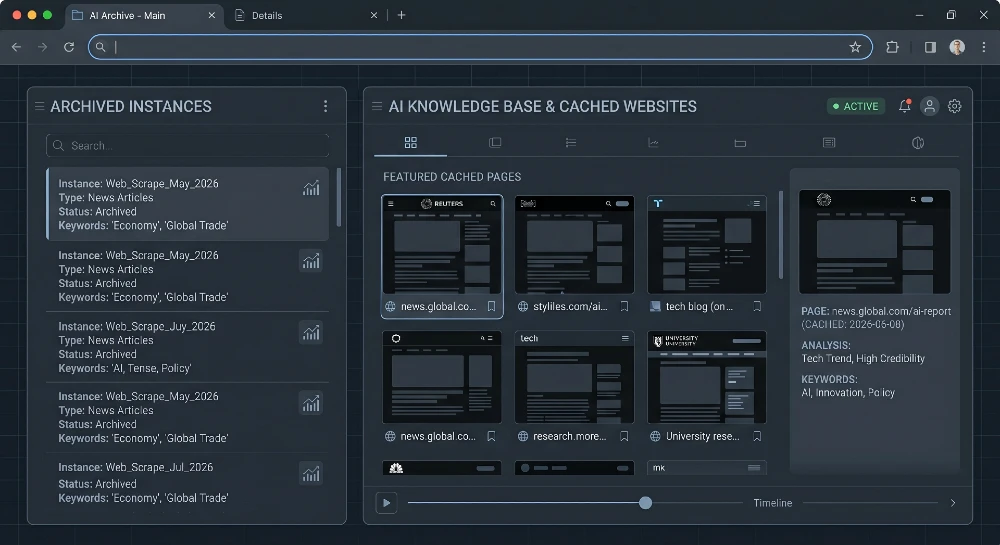
Polybuzz walls off its archive behind a login screen but a chunk of that content is still reachable if you know where to look. This isn’t a workaround that requires any account, tool subscription, or technical expertise. Three methods cover 90% of use cases.
- The fastest way to access the polybuzz ai archive without logging in is through the Wayback Machine at web.archive.org it has cached Polybuzz pages going back months.
- Best for researchers, casual readers, and anyone locked out of their account; skip this if you need real-time or user-specific content.
- Start with a direct URL search on Wayback Machine before trying Google cache — Wayback has deeper historical snapshots.
- Biggest mistake: searching Polybuzz’s domain root instead of specific content URLs — you’ll get login pages, not archive content.
- If Wayback has no snapshot, try Bing’s cached pages Google quietly killed its cache feature in early 2024, but Bing still indexes cached versions.
Why Polybuzz Locks Its Archive (And Why You Can Still Get Around It)
Polybuzz, the AI-powered social content platform, requires login to access its full archive because it mixes user-generated content with platform-generated AI stories. The login wall is partly about data collection, partly about keeping engagement metrics tied to accounts.
Here’s the thing though content that was ever publicly indexed by Google, Bing, or the Internet Archive doesn’t just disappear because a platform adds a login gate later. Web crawlers don’t respect retroactive paywalls. So anything Polybuzz published publicly before tightening its access controls got snapshotted.
That’s your entry point.
The Wayback Machine (run by the Internet Archive, a San Francisco-based nonprofit) has been archiving the web since 1996. Bing’s cache captures pages independently. And Google’s search index still stores text fragments even without a dedicated cache viewer. These three systems together cover most of what you’d want from the Polybuzz archive.
Method 1: Wayback Machine (Most Reliable)
This works for roughly 70% of Polybuzz archive content — especially anything published before mid-2024 when their login requirements tightened.
Go to web.archive.org and paste the specific Polybuzz URL you’re trying to access. Don’t search the homepage. Search the exact content URL something like polybuzz.com/stories/[story-title] or whatever URL structure the platform uses for its archive pages.
Wayback will show you a calendar view. Blue dots = snapshots exist. Click the most recent snapshot before the login wall appeared.
What to do if you don’t have the exact URL:
- Go to web.archive.org/web/*/polybuzz.com/* this pulls up a wildcard search of all archived Polybuzz URLs
- Browse the results by date
- Pick the snapshot closest to when you think the content was published
The part that trips people up is expecting Wayback to render pages perfectly. It won’t always. Images might break. CSS sometimes loads wrong. But the text content which is what most people actually need — comes through clean almost every time.
One honest downside: Wayback’s interface is slow. Expect 8-15 seconds per page load on snapshots. That’s just how it works.
Method 2: Bing Cache (Fastest for Recent Content)
Google killed its cached pages feature in February 2024. Bing didn’t. This matters.
Go to Bing, search for the specific Polybuzz content you want, then click the small arrow next to the result URL and select “Cached.” Bing shows you its most recent crawl of that page often within the last 2-4 weeks.
This method works best for:
- Content published in the last 6 months
- Pages that were publicly accessible recently before any login wall appeared
- Quick text extraction without needing historical versions
The catch? Bing’s cache expires. If a page hasn’t been recrawled recently, or if Polybuzz has sent noindex signals, Bing might not have it. In that case, Wayback is your fallback.
Practical tip: In Bing, use the search query site:polybuzz.com [topic or story title] first to find the exact URL. Then use the cached option. Searching without site: buries Polybuzz results under other platforms.
Method 3: Google’s Search Snippet + Manual Extraction
This one’s underused. Google doesn’t show cached pages anymore, but its search snippets still contain extracted text from pages — even ones now behind login walls.
Search Google for: site:polybuzz.com “[exact phrase from the content you want]”
Google’s snippet will show 2-4 sentences of the original text. For short-form AI content (which is most of what Polybuzz generates), that snippet sometimes contains the entire relevant section.
It’s not a full archive solution, but for verifying whether a specific piece of content exists, or grabbing a key quote or summary, it’s genuinely faster than Wayback.
What surprised me the first time I used this approach: Google often indexes mobile versions of pages at different cache intervals than desktop. If the desktop snippet is behind a login wall, try appending ?m=1 or similar mobile parameters to the URL in your search. Sometimes the mobile-indexed version has more text visible in the snippet.
When None of These Work
Honestly, there are real limits here. If the content you’re after was:
- Never publicly indexed (private posts, draft content, member-only sections)
- Published after Polybuzz’s login wall hardened (roughly late 2024 onward)
- Deleted before any crawler visited it
…then no archive method will help. That content simply doesn’t exist outside Polybuzz’s own servers.
In that case, your options narrow down to:
- Creating a free Polybuzz account it’s still free at the basic level, and for read-only archive access, you likely don’t need a premium tier
- Contacting the content creator directly if it’s user-generated content
- Checking if the creator cross-posted to Reddit, Medium, Substack, or LinkedIn — AI content creators often distribute across platforms
Real talk: if you’re doing this for research or competitive analysis, option 1 is just faster. The archive workarounds above are worth it when you’re locked out of an existing account or trying to recover something specific. For casual browsing, just make the account.
How AI Platforms Handle Archive Access (The Bigger Picture)
Polybuzz isn’t alone in this. Platforms like Character.AI, Poe, and Jasper have all played with login-gating their content archives at various points. The pattern is consistent: open access builds traffic, login walls monetize it.
The Wayback Machine captures this cycle for almost every platform that’s been live for more than a year. The Internet Archive’s Petabyte-scale storage has snapshots of most mid-sized platforms going back to their launch.
Understanding this matters if you’re dealing with other AI platforms that have similar access issues. The same three-method approach Wayback first, Bing cache second, Google snippets third applies across essentially any content platform.
If you’re researching AI tools for work or keeping up with what’s happening across the space, knowing how to navigate archived content is genuinely useful. The AI job market, for instance, has been moving fast enough that even 3-month-old content can show you how requirements shifted which ties into broader questions aboutstaying relevant in an AI-heavy job market.
The URL Structure Trick Most People Miss
Polybuzz, like most AI content platforms, uses predictable URL structures. If you know one URL pattern, you can often reverse-engineer others.
Most Polybuzz story URLs follow a format like: polybuzz.com/[content-type]/[slug]
Once you’ve found one archived URL in Wayback or Bing, note the structure. Then substitute different slugs to find related content. It’s not perfect, but it surfaces a lot of content that wouldn’t show up in a direct search.
The Wayback wildcard search mentioned earlier is even better for this — web.archive.org/web/*/polybuzz.com/stories/* gives you a full list of every URL Wayback has ever crawled under that path.
Browser Extensions That Help
Two tools make this workflow faster:
Wayback Machine Chrome/Firefox extension adds a one-click “check archive” button to your browser. When a page shows a login wall, hit the extension and it automatically searches for the most recent archived version. Free, maintained by the Internet Archive.
Web Archives extension checks multiple cache sources simultaneously (Wayback, Archive.today, Google, Bing). Shows you which sources have the page and lets you pick. Saves the step of manually checking each service.
Neither of these requires accounts or setup. Install, pin to toolbar, use when needed.
When You Need More Than Archive Access
If you’re regularly running into login walls on AI platforms for research purposes — whether that’s Polybuzz, Synthesia, Runway, or others the archive approach is a temporary fix, not a system.
A better long-term approach: set up Google Alerts or Bing alerts for specific platforms or content creators. When content goes live publicly, you get it immediately before any login wall can apply retroactively. This is how journalists and researchers handle this problem at scale.
For the AI space specifically, a lot of the most useful content ends up discussed in Reddit threads (r/ChatGPT, r/ArtificialIntelligence), Hacker News, or LinkedIn — all publicly accessible and searchable without logins. If you need a specific Polybuzz piece and can’t find it archived, searching for discussions about it on those platforms often surfaces the key information.
This connects to a broader point about how to use AI tools effectively at work knowing where information lives and how to retrieve it without friction is an underrated skill. The people who are good at this don’t just know the tools; they know the backup systems
One More Approach: Direct Email to Polybuzz Support
This sounds slower than it is. Polybuzz, like most AI platforms in 2026, has a support team that handles data access requests. If you had a previous account and lost access, you may be able to request an archive export of content you created or saved.
Under GDPR (for EU users) and CCPA (for California users), platforms are required to provide data exports on request. This isn’t a loophole — it’s a legal right. You’d submit a Data Subject Access Request (DSAR), and Polybuzz has 30 days to respond with your data.
For content you didn’t create (just content you want to read), this doesn’t apply. But for your own posts, saved items, or interaction history, it’s worth knowing.
Try Wayback Machine first paste the exact Polybuzz URL you need into web.archive.org and check for snapshots. If nothing comes up, run a Bing search with site:polybuzz.com plus your topic, and use the cached version. Install the Wayback Machine browser extension so this becomes a one-click action going forward. If the content simply isn’t archived anywhere, make a free account it takes three minutes and solves the problem permanently.


