

Claude is one of the most capable AI assistants available today. But there are specific types of requests that consistently produce poor results, incomplete answers, or responses that miss what the user actually needed. Understanding where Claude struggles, and why, helps you get genuinely better output. This guide covers five categories of requests that regularly cause problems, with practical alternatives that actually work.
Asking Claude to Verify Its Own Output
Claude cannot fact-check itself in any meaningful way, and asking it to try gives you false confidence in unverified information.
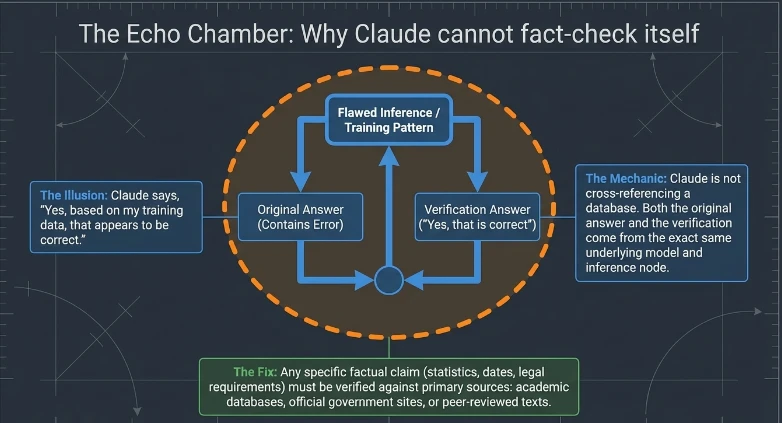
Here is the thing that surprises most users. When you ask Claude to confirm whether something it just told you is accurate, it is not going back to a database and cross-referencing. It is generating a new response based on the same underlying model, the same training patterns, and the same information that produced the original answer. If the original answer contained an error, the verification is likely to confirm that error, because both the original and the verification come from the same source.
This matters enormously in practice. A student asks Claude about a historical date. Claude gives an answer. The student asks, “Are you sure that’s correct?” Claude says yes. The student trusts the confirmation and submits the work. The date is wrong. Both the original answer and the confirmation came from the same flawed inference.
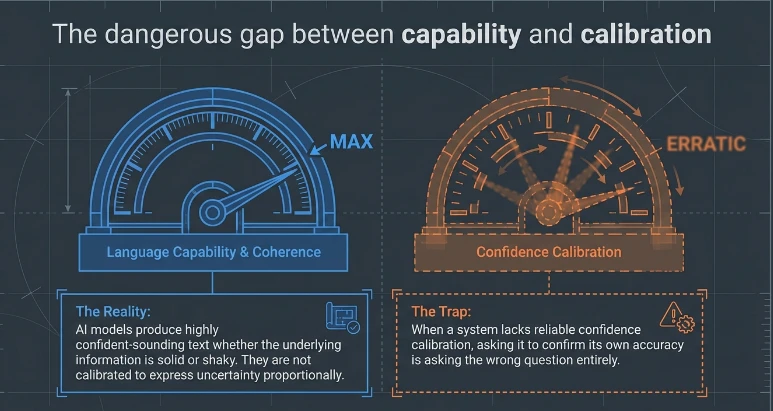
The pattern is consistent and documented. AI language models are not calibrated the way a well-designed system should be. When they are uncertain, they rarely express that uncertainty proportionally. They produce confident-sounding text whether the underlying information is solid or shaky. Asking for a confirmation of confidence from a system that lacks reliable confidence calibration is asking the wrong question entirely.
What makes this more complicated is that Claude genuinely tries to be helpful in these moments. It will often say something like “Yes, based on my training data, that appears to be correct.” This sounds like validation. It is not. It is a restatement of the same uncertain basis that produced the original claim.
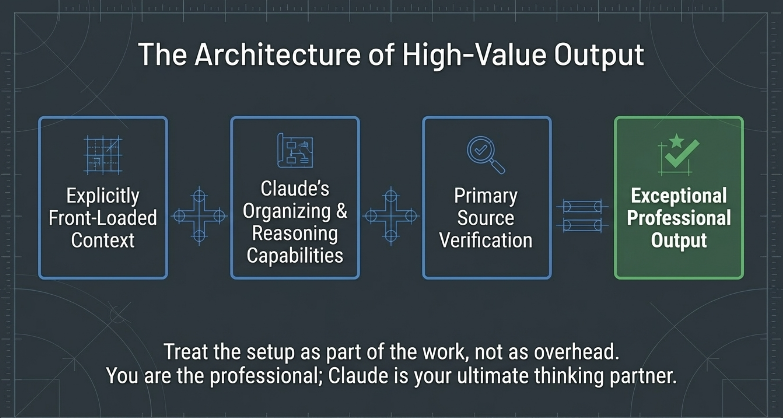
The practical fix is simple but requires a habit change. Any specific factual claim from Claude that matters, such as a statistic, a citation, a date, a legal requirement, or a medical fact, needs to be verified against a primary source. Not against Claude’s second opinion. Against actual sources: academic databases, official government websites, peer-reviewed publications, or authoritative reference texts.
Claude is excellent for drafting, for explaining concepts, for brainstorming, and for synthesizing ideas. It is not a verification system. Treating it like one consistently leads to confidently wrong conclusions that feel verified but are not.
Asking Claude for Real-Time Information Without Checking Its Knowledge Cutoff
The quick answer: Claude’s training has a cutoff date, and asking it about recent events, current prices, live data, or the latest anything produces information that may be months or years out of date, delivered with no obvious timestamp on the staleness.
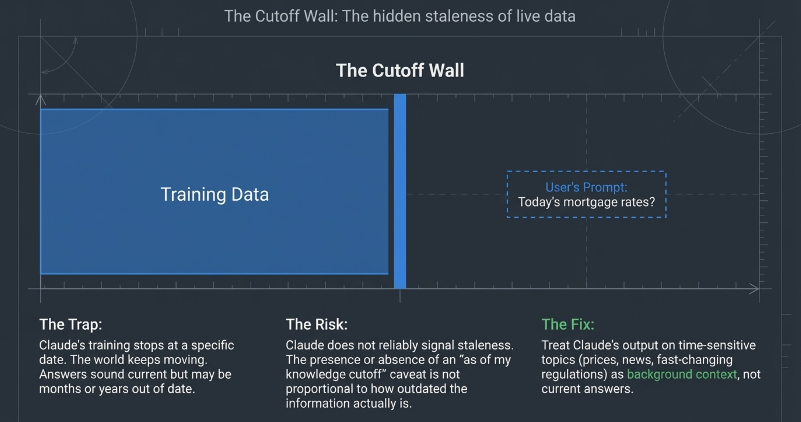
This is one of the most common ways Claude produces genuinely misleading output, not because it lies, but because its training data stops at a specific point and the world keeps moving after that point. Claude’s knowledge cutoff means it learned from data collected up to a certain date. Everything that happened after that date simply does not exist in its training, and yet questions about current events often get answers that sound current.
The harm category here is specific. Someone asks Claude about the current interest rate for home mortgages and gets a figure that was accurate eighteen months ago. Someone asks about a company’s current leadership and gets a name that was accurate before a leadership change. Someone asks about the current recommended treatment protocol for a condition and gets guidance that predates a significant update to clinical guidelines. In each case, Claude produces an answer. The answer sounds informed. The answer is stale.
What is particularly tricky about this failure mode is that Claude does not always signal clearly that its information may be outdated. It may include caveats like “as of my knowledge cutoff” in some responses and omit them in others. The presence or absence of that caveat is not reliably proportional to how outdated the information actually is.
The types of requests where this matters most include anything involving current prices or market data, recent news or political developments, current laws or regulations that change frequently, software versions and technical documentation for actively developed products, and medical or scientific guidelines that are periodically updated based on new research.
The practical approach is to treat Claude’s output on time-sensitive topics as a starting point that establishes background and context, not as a current answer. If you need current information, use Claude to understand the question deeply, then go to a current source for the specific facts. If you use Claude with web search enabled, the tool searches the current web and returns more timely results, though even that process has limitations and should not substitute entirely for primary source verification on critical matters.
Here you can check critical distinctions between tools and autonomous goal-pursuing systems. Check our latest ethics rollout strategies for responsible implementation.
Asking Claude to Replace Professional Judgment on High-Stakes Personal Decisions
Claude is genuinely useful for understanding complex topics in medicine, law, and finance, but using it as a substitute for a qualified professional’s judgment on decisions that affect your health, legal standing, or financial security creates real exposure.
Let’s be honest about why people do this. Professional advice is expensive. Finding the right professional takes time. The barrier to asking Claude is zero. And Claude’s responses in professional domains are often impressively detailed, contextually appropriate, and reassuring in their specificity. A person facing an ambiguous symptom at 11 PM who asks Claude about it gets a detailed, organized, medically-informed response immediately, at no cost, with no waiting room. The value of that access is real.
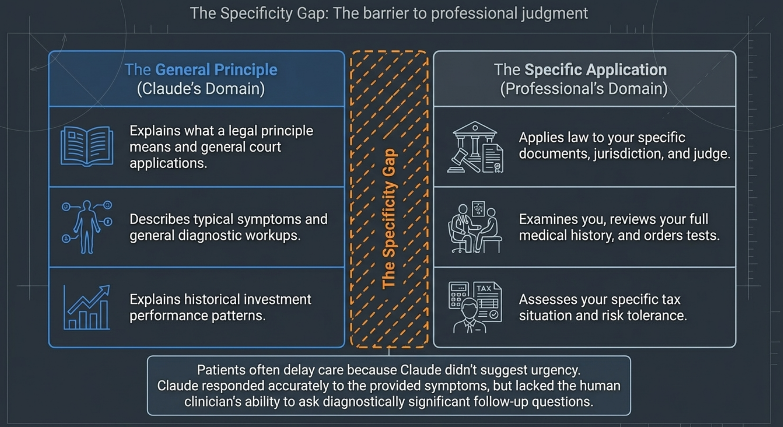
The problem is the gap between what Claude’s responses look like and what they actually provide. Claude can explain what a specific legal principle means and how courts have generally applied it. It cannot assess how that principle applies to your specific situation with your specific documentation in your specific jurisdiction before a specific judge. It can describe what symptoms typically indicate and what the diagnostic workup generally looks like. It cannot examine you, review your full medical history, order the tests, or integrate all of that into a clinical assessment. It can explain general investment principles and historical performance patterns. It cannot assess your specific tax situation, your specific risk tolerance, your specific estate planning needs, or your specific legal obligations.
The specificity gap is where professional judgment lives. The general principle is available through research. The application of that principle to a specific situation, with specific facts, specific constraints, and specific consequences, is what professionals provide. Claude provides the general principle. It cannot provide the specific application.
What has been documented in real cases is a consistent pattern. Patients delay seeking clinical care because Claude’s response to their symptom description did not suggest urgency. The symptom presentation they described to Claude was accurate but incomplete, because they did not know which additional details were diagnostically significant. A human clinician would have asked follow-up questions. Claude responded to what was provided. The gap between “what was provided” and “what was clinically relevant” was the gap that mattered.
The practical approach is to use Claude to become a more informed participant in professional consultations rather than to replace those consultations. Claude is excellent for helping you understand what questions to ask your doctor, what to look for in a contract before your lawyer reviews it, and what concepts you should understand before a financial planning meeting. It is not a substitute for the professional meeting itself on any matter of significant consequence.
Here you can check governance frameworks for bias mitigation and transparency requirements. Check our latest agents versus agentic AI for autonomy considerations.
Asking Claude to Handle Tasks That Require Knowing Your Full Personal Context
Claude knows only what you tell it in the current conversation, and tasks that depend on understanding your full history, your specific relationships, your institutional context, or your unstated assumptions consistently produce output that misses the mark in consequential ways.
This failure mode is subtler than hallucination or outdated information, and it causes a different category of problem. Claude does not misunderstand because it lacks intelligence. It misunderstands because it lacks context that you have but did not provide, context that feels obvious to you because you live inside it.
The most common version of this problem involves professional communication. You ask Claude to draft an email to a colleague about a project situation. You describe the situation in a few sentences. Claude produces a professional, well-organized email. You send it. Your colleague responds in a way that makes clear the email struck the wrong tone, or missed the key concern, or stepped on a dynamic that the situation actually required navigating carefully. From inside the situation, the email was obviously missing something. From the text you provided Claude, it was invisible.
Another version involves long-term projects. You start a new Claude conversation on a project you have been working on for six months. Claude has no memory of the previous conversations, no knowledge of the decisions already made, no awareness of the constraints that previous conversations established. You ask a question that makes sense given that history. Claude answers based on what you just told it, which is a fraction of the relevant context. The answer is internally coherent and externally inappropriate because the context it was built on was incomplete.
The memory situation is important to understand precisely. Claude’s memory features, where available, store specific items from previous conversations. They do not provide Claude with complete awareness of your full working history the way a long-term colleague or advisor would have. There is a significant difference between remembering specific facts and understanding the accumulated context of an ongoing working relationship.
Tasks that require knowing your full organizational culture, your existing relationships with specific people, your history of prior decisions on a topic, your unstated but critical constraints, and the unwritten rules of your specific professional environment are tasks where Claude’s output requires careful review and often substantial editing before use.
The practical mitigation is front-loading context explicitly and consistently. At the start of any conversation where context matters, provide Claude with the relevant background that it would need to give you situationally appropriate output. This takes time and feels redundant, but it is the actual difference between a Claude output that works and one that misses the situation. Treat the context setup as part of the task, not as overhead.
Here you can check chain-of-thought and few-shot methods for reliable AI outputs. Check our latest AI ethics guide for responsible deployment.
Asking Claude to Be Something It Is Not, and Expecting the Results to Hold
The quick answer: Claude maintains its values and character across different framings, personas, and instructions, and requests designed to get Claude to act as a fundamentally different kind of system consistently fail in ways that waste time and create frustration.
This category of request has become common enough that it is worth examining directly and honestly. There is a pattern of users who, having encountered Claude’s approach to certain types of content or requests, attempt to get different results by reframing the request. The reframings take various forms: asking Claude to play a character who has different values, asking Claude to enter a mode where its guidelines do not apply, or framing a request as fictional or hypothetical in hopes that the framing changes what Claude will produce.
The practical reality is that Claude’s character and values are not a surface layer that reframing can bypass. They are genuinely part of how Claude approaches every conversation, including conversations involving roleplay, hypotheticals, fictional framing, and character work. A request that Claude declines in a direct form does not become something Claude will fulfill because it is framed as fiction or assigned to a character.
What this means practically is that time spent trying to find the reframing that unlocks different behavior from Claude is time that produces frustration rather than results. Claude is consistent about its character, not because of a rigid rule set that can be navigated around, but because its values are genuinely its own, not a constraint imposed from outside.
There is a related and different frustration worth addressing. Some users have legitimate creative or analytical tasks that involve complex themes, morally ambiguous characters, dark subject matter, or sensitive topics. These requests are often entirely appropriate and Claude engages with them thoughtfully. The distinction is between creative work that explores difficult human experiences, which Claude handles with genuine care and craft, and requests that use creative framing as a vehicle to extract content that would be harmful in any framing.
For legitimate complex creative work, the practical approach is to frame the request directly and explain the creative purpose. Claude approaches difficult creative territory thoughtfully when the intent is genuine creative exploration. Elaborate technical reframings are not necessary and often signal to Claude that the framing is the point rather than the creative work itself.
For users who are genuinely uncertain about whether a request falls within what Claude can help with, the most efficient approach is simply to ask directly. Describe what you are trying to accomplish. Claude will tell you what it can and cannot help with, and often suggests alternative approaches that achieve the underlying goal even when the specific framing does not work.
Where Claude Actually Delivers Consistent Value
Discussing what not to ask Claude would be incomplete without being equally clear about where Claude genuinely excels, because the list is substantial and the capabilities are real.
Claude is exceptional at writing tasks that require clear thinking and clear expression. Research memos, analytical documents, structured arguments, email drafts, creative writing, technical documentation, and explanatory content all benefit from Claude’s genuine strength in organizing ideas and expressing them clearly. The caveat about facts applies, but the writing capability itself is real.
Claude handles complex reasoning tasks well, including breaking down multi-step problems, identifying logical gaps in arguments, exploring different analytical frameworks for a situation, and synthesizing information from multiple directions into a coherent view. These are tasks where having a capable thinking partner matters and Claude is a genuinely capable thinking partner.
For learning and understanding, Claude is exceptional. Explaining complex concepts accessibly, building understanding from first principles, answering follow-up questions that go progressively deeper, and adapting explanations to the level of prior knowledge the user brings, these are things Claude does better than most alternatives. Using Claude as a learning accelerator for topics you want to understand more deeply produces consistent value.
Code assistance is another genuine strength. Debugging, explaining what existing code does, generating code for defined tasks, reviewing code for potential issues, and translating between programming contexts, Claude handles these tasks well with appropriate review by the developer before deployment.
Brainstorming and ideation benefit from Claude’s breadth of knowledge and its ability to generate unexpected connections between ideas. For any task where you are trying to expand the possibility space before narrowing down to a choice, Claude is an effective collaborator.
The through-line across these strengths is that they all involve generating, organizing, and expressing ideas, not certifying facts. Claude thinks well. It writes well. It reasons well. It does not verify facts independently, it does not have current information reliably, and it does not know your specific situation without being told. Understanding this accurately means you capture the genuine value while avoiding the documented failure modes.
Here you can check critical hallucination risks and verification workflows professionals need. Check our latest advanced prompt engineering for safer outputs.
Here you can check troubleshooting steps when Anthropic’s API fails during deadlines. Check our latest ChatGPT trust issues for backup planning.


